01
“My hips lock up on the stairs.”

Harrison's Movement Lab · Chalfont, PA
Myoskeletal Alignment in Chalfont, PA. We don't chase the sore spot — we correct the pattern pulling on it.
Book Your Assessmentmove better · feel better · live better.

MEET THE EXPERT
Licensed manual therapist, 15 years in practice. Every session at the lab is with me — I'll be the one reading your structure, finding your pattern, and doing the work.
More about meSOUND FAMILIAR?
01
“My hips lock up on the stairs.”
02
“It feels great for two days, then it's back.”
03
“Nobody's ever looked at the whole picture.”
That's not a muscle problem. That's a pattern problem.
THE COMPENSATION CHAIN
Follow one common chain upward. Scroll to scan the structure, or select a point to inspect it.
01
A tight hip flexor pulls the pelvis forward.
THE METHOD
Developed by Erik Dalton, Myoskeletal Alignment Technique is a manual therapy system that assesses and corrects postural and movement patterns rather than treating pain in isolation. It combines deep tissue work, joint mobilization, and corrective movement to help the body find a more efficient—and more durable—way to organize itself.
| Massage | Chiropractic | Myoskeletal Alignment | |
|---|---|---|---|
| Focus | Soft-tissue relief | Joint alignment | Whole movement pattern |
| Duration of relief | Often temporary | Varies by pattern | Built for lasting change |
| What it addresses | Muscle tension | Joint restriction | Muscle, joint & nervous system |
WHAT WE TREAT
01
Address the pelvic and movement patterns that keep loading the same vulnerable tissues.
02
Trace strain beyond the sore spot to restore easier rotation, reach, and posture.
03
Rebuild usable movement after injury so returning to training does not mean returning to pain.
04
Improve joint options, body awareness, and confidence in the movements your life requires.
PROOF, NOT PROMISES
“I first saw John for a sports injury from Jiu Jitsu. He had me back on the mat in record time. This is an accomplishment as I am 69 years old.
“As a high-level marathon runner, John's expertise has been invaluable. His deep understanding of sports therapy has significantly improved my recovery time — I've achieved new personal records.
“He personalizes your session based on your lifestyle, struggles and pain points. His energy is healing.
0
Years
0+
Reviews
0s
Sessions
ABOUT JOHN
John Harrison is a licensed manual therapist with almost 15 years of experience. His work draws from certifications in Myoskeletal Alignment, deep tissue therapy, trigger point therapy, and brain-based bodywork, supported by a background in restorative exercise and personal training.
He reads the whole structure—not just the sore spot—then works with your body to change the pattern underneath it.
FAQ
Myoskeletal Alignment Technique is a hands-on system developed by Erik Dalton. It combines postural assessment, deep tissue techniques, joint mobilization, and guided movement to improve the relationships between muscles, joints, and the nervous system—not simply quiet one painful spot.
Chiropractic care commonly centers on joint manipulation. Myoskeletal Alignment works more gradually through soft tissue, joint positioning, and movement patterns; there is no automatic high-velocity adjustment, and the session follows what your body shows during assessment.
A relaxation massage typically follows a general sequence and focuses on temporary tension relief. Here, each session begins with how you stand and move, then applies targeted manual work to the specific compensation pattern contributing to your symptoms.
The work can feel intense in restricted tissue, but it should remain productive and manageable—not something you have to endure. John checks pressure and response throughout, adjusting the technique so your nervous system can accept the change rather than guard against it.
That depends on how long the pattern has been present, your activity, and what reinforces it between visits. Many people notice a meaningful change early, while durable improvement usually comes from a short series paired with simple movement work at home.
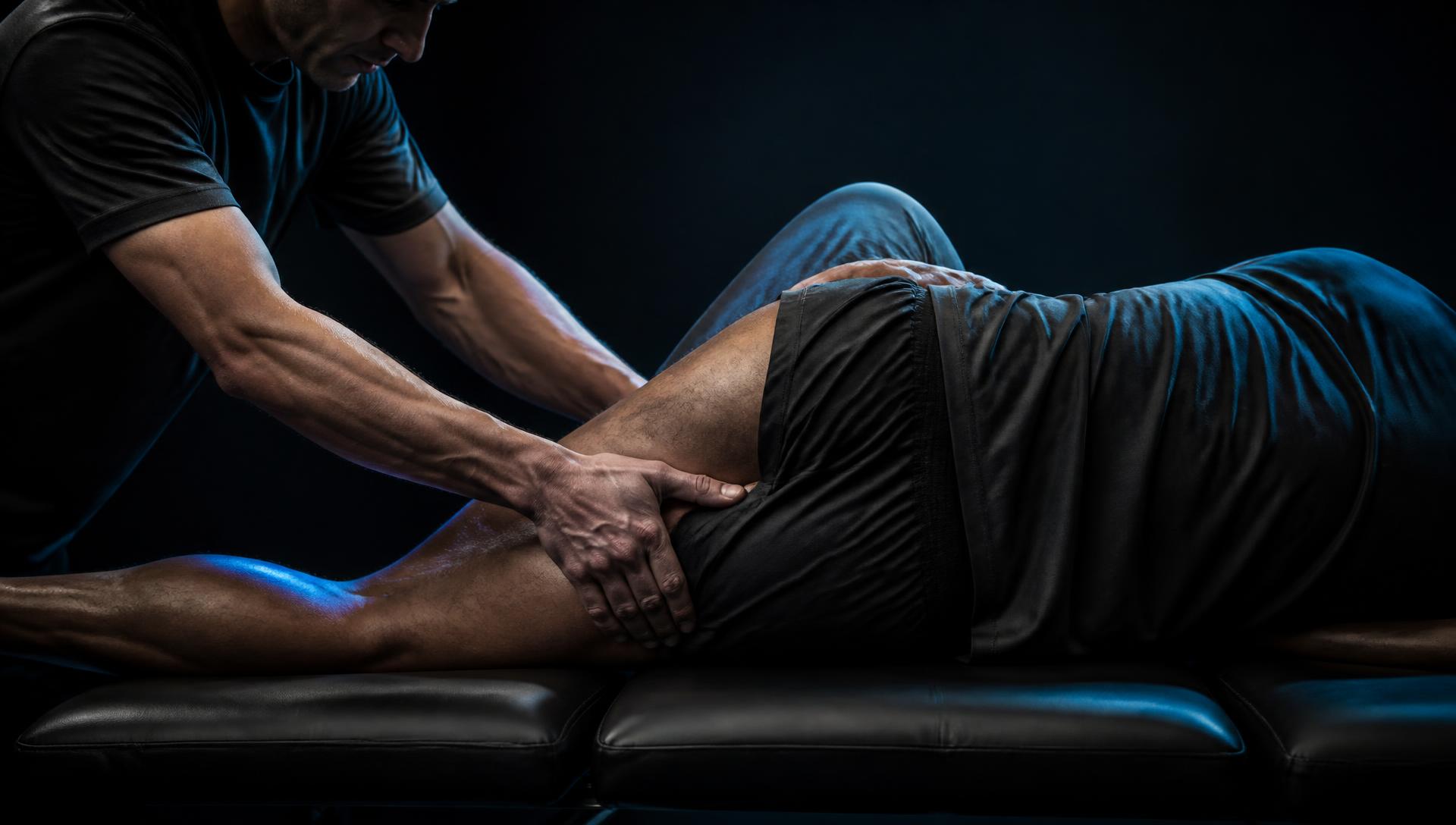
Wear flexible athletic clothing that lets you move comfortably, such as shorts, leggings, or a T-shirt. Because assessment is movement-based and some techniques are performed clothed, freedom of movement matters more than dressing down.
Yes. John works with recreational and competitive athletes who need to recover, restore range, and return to training without repeating the same compensation. The work is equally appropriate for active adults who simply want stairs, work, or daily movement to feel better.
STOP CHASING THE SYMPTOM